13 Free Effect Plugins We’d Keep If the Studio Budget Vanished
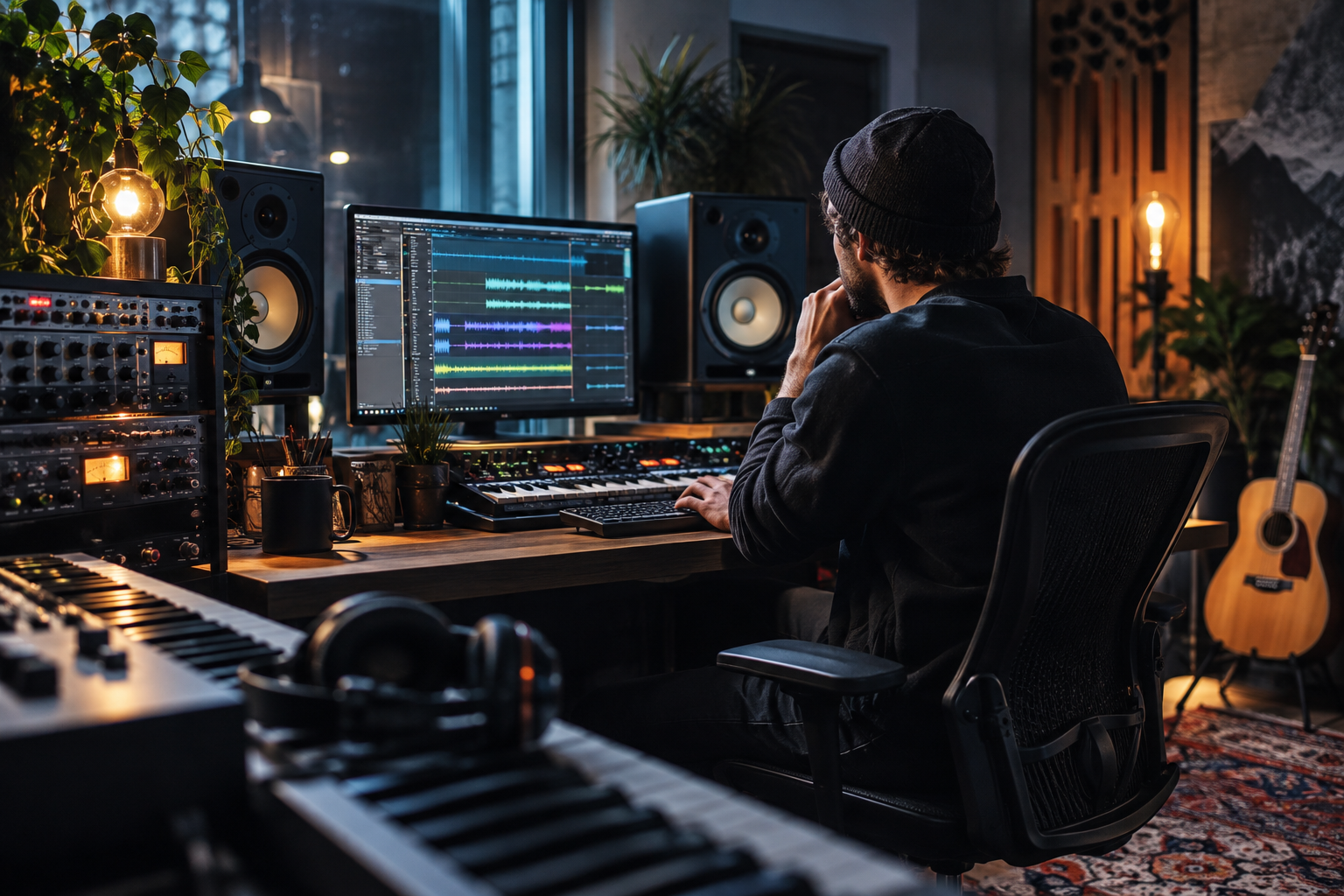
On a roughly quarterly basis someone in a group chat asks the same question: if you had to wipe your plugin folder and start over with nothing but freeware, what would actually survive? Not the fun freebies you install, poke at for twenty minutes, and forget. The ones you’d reach for on a deadline when a client is paying you. I’ve rebuilt my template often enough to know which free plugins earn a permanent slot – and strip away every paid license tomorrow and maybe a dozen of them still make the cut.
So let’s run that hypothetical on effects specifically. No synths here. Just the processing tools – EQ, dynamics, reverb, saturation, utility – that hold up when the work is real. The bar isn’t “good for free.” It’s “good enough that you wouldn’t feel robbed if it were the only thing you had.”
Why the bar should be higher than “it’s free”
The free plugin landscape in 2026 is genuinely ridiculous. Tools that would have cost hundreds a few years ago now cost nothing, and they aren’t crippled demos or lite builds – they’re full-strength instruments and processors. But that abundance cuts both ways. A dumpster-dive list of 50 to 100 freebies just creates option paralysis and a cluttered workflow that slows you down instead of helping.
What matters is maintenance and stability. An abandoned plugin quietly becomes a liability as your DAW and OS move on, and a tool that crashes or behaves unpredictably across sessions is worse than no tool at all. Before anything makes it into my template, it has to pass the same checks a paid plugin would: does it actually sound good in a mix (not just soloed on a demo patch), is it stable, is the UI fast enough to stay creative, and is the developer still shipping updates? Free is a price, not a personality. Here’s what passes.
EQ and dynamics
ZL Equalizer 2
If I had to name a single standout free effect from the last year, this is it. ZL Equalizer 2 is a free alternative to FabFilter Pro-Q in a way I don’t throw around lightly – the workflow, the analyzer, the band handling, and the overall polish are shockingly good for something that costs nothing. The EQ itself is deep and flexible enough to handle serious mixing tasks and almost anything you’d throw at it at the mastering stage.
Practical note: the analyzer refresh and band-grab behavior feel close enough to Pro-Q that muscle memory transfers. If you’re building a streamlined free rig and can only keep two EQs, this is one of them.
TDR Nova
Nova from Tokyo Dawn Records was one of the first easily available dynamic EQs, and it’s still worth the download chiefly because it’s so easy to use. Ducking frequency bands against a sidechain input is the kind of thing that sounds intimidating until you’ve done it once in Nova – then you wonder how you mixed without it. You still get a handful of bands with the no-cost edition, enough to cover most practical tasks. If you need two more nodes and extra functionality, the paid Gentlemen’s Edition is about €60. If you’re picking only two free EQs, this is the other one alongside ZL Equalizer 2.
Xfer Records OTT
Yes, it’s a meme. It’s also genuinely useful. Think of OTT as a spectral squeezer: it pins peaks down, pulls quiet detail up, and leaves a glossy sheen over anything routed through it, and on a bus, a synth return, or a parallel channel, that aggressive character is exactly what you want. The joke is that people slap it on the master. The reality is that used with restraint it’s a legitimate tone-shaping box, and it costs nothing.
Reverb and space
Valhalla Supermassive
Valhalla only charges $50 for its effects plugins, which is already cheap – but Supermassive is free, and that’s better still. As the name suggests, it’s built for huge reverbs: the kind you can use to turn any dry sound into a pad, or to smear a snare into an ambient cloud. It also has a delay circuit that specializes in massive feedback washes. The developer keeps updating it, and there are now a whopping 22 reverb/delay modes to work with. For sound design and depth, this one stays in the rack for good.
Eventide Temperance Lite
This one comes with an asterisk. Temperance Lite is only free until December 31st, so if you’re reading this before that deadline, grab it immediately. It’s a “modal reverb” – instead of a fixed tail, it lets you shape which notes bloom inside the reverb, which opens up sound-design moves no standard reverb gives you. Even if you’re drowning in reverbs, it brings something new to the table. After the deadline, treat it as a paid tool that’s currently in your reach.
Character and saturation
Free saturation is where the market got seriously good. The best free plugins now cover saturation and texture with genuine analog-style character, not just crude clipping. Where it falls short versus paid options is usually in the more surgical, band-specific tone shaping – but for broad harmonic color on a bus or a drum shell, the free field is competitive. If you’re choosing plugins for a mix bus, pick one saturator and learn it rather than stacking three. The goal isn’t maximal grit; it’s a consistent, repeatable character you can dial by ear.
The other classic color move is a soft clipper or tape-style stage after your dynamics. It catches peaks, glues transients, and gives the mix bus a slightly denser feel. It’s the kind of processing that isn’t flashy but is invisible when it’s right – and free options handle it fine.
Utility and workflow
The unsung heroes of a free rig are the boring tools. Metering, gain staging, and analysis plugins rarely make best-of lists because they don’t sound like anything, but they’re the reason a mix translates. If your paid metering suite vanished, you’d want a decent loudness meter, a spectrum analyzer, and something to inspect stereo width before you trust your ears on a tired session.
Then there’s the wildcard category. Some free effects do things with time and rhythm – gating, stuttering, glitching – that are hard to get elsewhere. They’re not daily drivers, but when a track needs something unpredictable, having one or two of these in the folder beats building it from scratch or skipping the idea entirely.
How I’d actually build this rig
- Two EQs, minimum. ZL Equalizer 2 for surgical and mastering work, TDR Nova for dynamic band control. Together they cover almost everything Pro-Q would do in a session.
- One character compressor and OTT. A workhorse for control, OTT for when you deliberately want aggressive multiband flattening.
- Two reverbs with different jobs. Supermassive for huge and ambient, Temperance Lite (while free) for modal tails you can pitch-shape.
- One saturator you’ve learned. Not three. Pick one, understand its gain staging, stop there.
- Metering and utility. Loudness, spectrum, stereo inspection. Unglamorous, non-negotiable.
The honest takeaway: dozens of free-plugin lists recycle the same names without explaining why each earned its place, and that’s useless when you’re deciding what to install. The list above is short on purpose. Each entry has a specific job, a reason it survives a stripped-down template, and – where it applies – a clear limit. Temperance Lite expires, Nova’s free tier caps at four bands, OTT is a blunt instrument. Knowing the edges is what makes the tool trustworthy.
If your budget vanished tomorrow, you wouldn’t be starting from nothing. You’d be starting from a smaller, more deliberate folder – and honestly, some of these would make the cut even if the money came back.